Landscape Tour
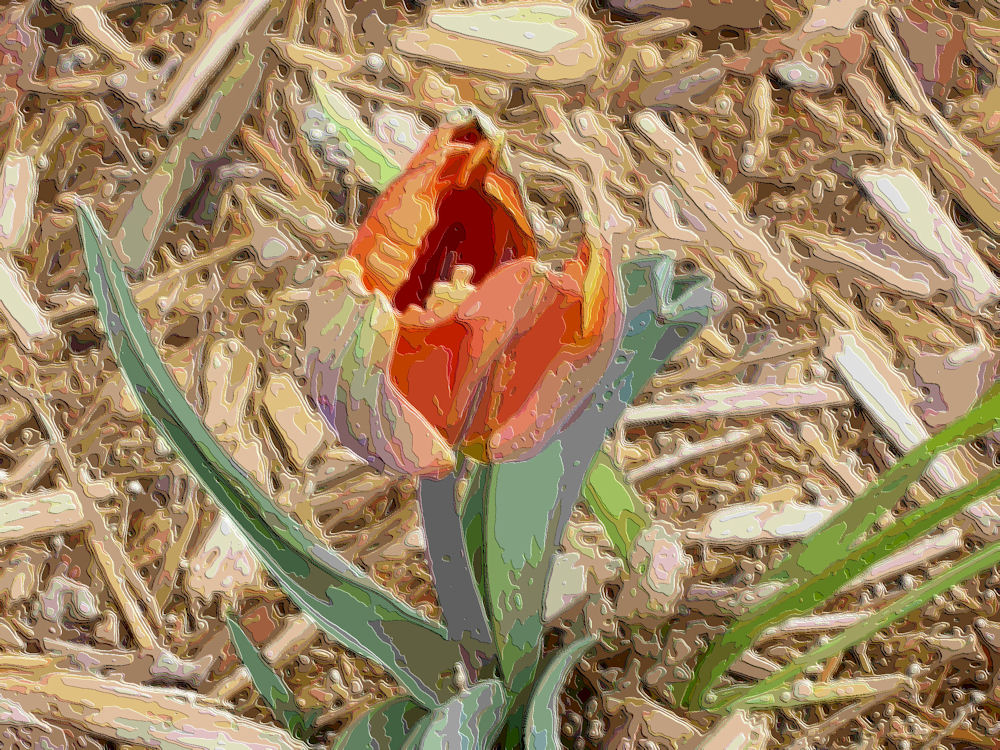
Rembrandt tulip
Most of the
pictures are sized 1067x800, so a screen height (in pixels) of at least 800 is best.
This tour has hundreds of pictures from 1998 to the present on over 100 web pages.
These pages are actually a tool for us to use in keeping track of our plants: what we have, where they are planted, when they bloom, etc., but we hope that others may get some use from this site as well.
Continue
We live in Hot Springs Village, Arkansas, which is Zone 7b.
The lot was heavily wooded before we built and we tried to preserve as many
trees as we could during construction of our house, which makes all of our gardens "partial shade" to "full shade".
The initial landscaping was done in September 1999.
Continue
The landscape tour starts at the street, down a long driveway, around beds in the
front yard, then on to the "back yard" (which is really our side yard --
see the plat).
Each page in this tour usually just has one or two pictures on it with links
to continue on or to turn left or right.
A picture with multiple plants usually says to point to plants using your
mouse cursor. Doing so will bring up the name of the plant and clicking when the
name comes up will bring up a new page with more info and pictures about the
plant.
The links are repeated in text below the pictures.
Continue
After viewing a new page, you usually have to
click on your browser's Back button to return to the previous page to continue
the route you were taking. However, most pages have links at the bottom for
jumping to other locations.
Sometimes a page will say to click to see the same plant or area some
years back. Such pictures are displayed on the same page, just swapping out with
the current picture. When you bring up the past picture, the prompt will change,
telling you to click to return to the present, but you can just
leave the old picture showing if you are ready to continue to another page.
Start this page over
Click here to begin the tour
See a list of all our
plants
See what pages/plants have been
added/changed
Read about our landscaping
experience
Read about buying plants online
Here are the major differences in buying plants online versus locally:
- While it is possible to buy plants in pots online, most of the time you will receive plant roots, rhizomes, or bulbs. While many people buy plants which are already blooming from local nurseries, most experts say that it is preferable NOT to get plants already in bloom.
- Plants can be had MUCH less expensively online. I saw a landscape show recently where a daylily from a local nursery was purchased for $9. Yes, it was already over 12" tall and had a beautiful flower, but about the same time as that show, I bought a reblooming daylily collection from SpringHillNursery.com and got 10 daylilies for a total of $15. In two weeks, all 10 plants had already put out over 6" of growth. So, $1.50 each versus $9 for essentially the same plants.
- A wider variety of plants and rarer plants are available online. You can Google for almost any plant in existence and find it for sale somewhere. And any online nursery you visit will have a much wider selection of plants than your local nursery unless you live near a very major metropoliton area.
- A local nursery may only stock what is currently in season. Online, you can shop for plants which are not in season, but which will be shipped to you at the proper planting time. The flip side is that at a local nursery, you can buy plants, take them home and plant them right away. Online, you have to wait.
- At a local nursery, you can examine the plants before you buy them. Online, you take what they send you. However, if you examine the plants when they arrive and find, for example, that some bulbs you received have gotten squishy in the mail, you can call customer service and they will replace them for free. Still, that's more trouble and delay than you get by shopping locally.
- Online nurseries have what appears to be liberal replacement policies. They will replace plants which do not come up or which do not survive the first year, even if it is possible that the fault is with the way they were planted or with their environment. However, customers who ask for too many replacements are asked not to order any more. Given the large numbers of plants you can get online for much less than at a local nursery, even if some plants die and you don't ask for replacements, you will still come out ahead online, cost-wise.
In the book The Ever-Blooming Flower Garden, the author's accounts of how many pricey plants don't survive in the fancy beds she plants was a wake-up call for me. She blames overcrowding, the soil, under- or over-watering, etc., but she does not blame the supplier for plants which die. After reading this, I may never ask for a free replacement again if a plant comes up and then dies, even though some places offer lifetime guarantees.
If you want to see an extensive list of online nurseries along with customer ratings of each, go to DavesGarden.com.
Be careful of buying "preplanned gardens". While you may save a little money compared to buying the individual plants at full price, you can often get the individul plants on sale for less. When buying a set of plants, you may settle for some you would not otherwise buy just because they are included in the set. You should really want EVERY plant you buy. One set of shade plants I bought included what I found out later to be several VERY invasive plants (banned in some states). I ended up throwing them away. Another plant was a fern, and I already have a yard full of ferns, but it didn't come up anyway. I've bought my last preplanned garden.
See our photos of
Arkansas wildflowers
Go to our home page
Contact us
|